
The story
Most people know Murree as a holiday hill station. Fewer know that in September 1857, the hill clans rose and tried to take it in a single night.
Murree sits high in the Galyat hills, north-east of present-day Islamabad, at about 2,291 metres. In 1857 the people of these hills belonged to clans that had lived here for generations: the Dhund Abbasi, the Karral, the Satti and others.
The British annexed the Punjab in 1849 and chose the ridge for a sanatorium. Many clans first welcomed them after years of Sikh rule; the welcome did not last. The British also recruited local men, and the same families could be found on both sides.
When rebellion broke out on the plains in May 1857, troops were sent to retake Delhi. By late August, Murree was thinly defended, with British families still living there, among them Lady Lawrence.
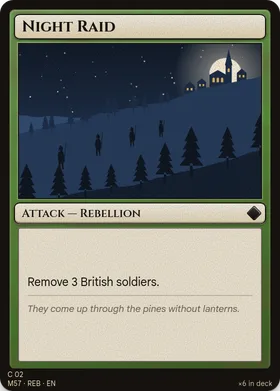
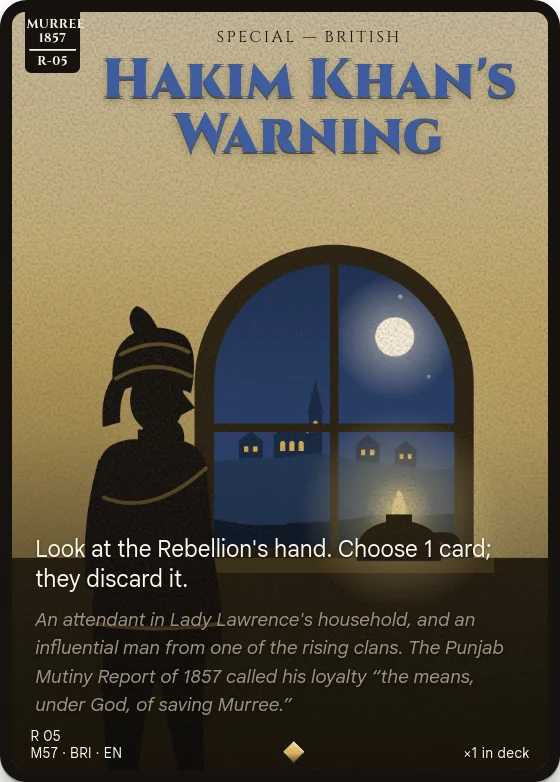
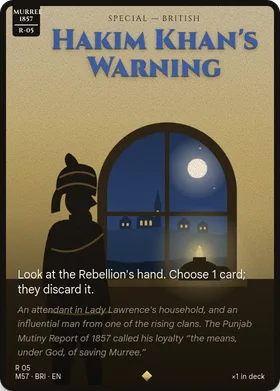
Sardar Sherbaz Khan, chief of the Dhund Abbasi, planned for around 300 men to climb the hillsides in the dark. But Hakim Khan, an attendant in Lady Lawrence’s household, warned the British. When the attackers came up through the dark on 2 September, the station was waiting.
- 1849The British annex the Punjab
- 1851Building of the Murree hill station begins
- 1853Murree becomes a permanent town
- May 1857Murree’s church is consecrated. On the plains, rebellion breaks out and Delhi falls
- July 1857Sardar Sherbaz Khan plans the attack on Murree
- Late Aug 1857Much of the garrison leaves for Delhi
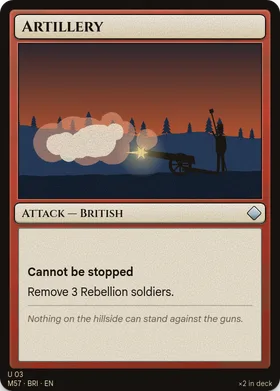
- 2 Sept 1857About 300 men attack the station: the night of this game
- 3 Sept 1857Troops arrive from Rawalpindi
What really happened
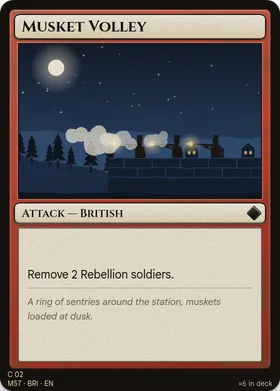
Warned by Hakim Khan, the British were ready. After a few hours of skirmishing, the attackers withdrew. Only two or three of them had come within range of the British muskets and been killed.
The next day, troops arrived from Rawalpindi and moved into the Dhund country north-west of Murree. Eleven villages were burnt. Fifteen of the leaders were later captured and put to death. Sardar Sherbaz Khan was captured and executed; accounts differ on the details of his death and the fate of his family.
The rising at Murree was one small part of the rebellion of 1857, remembered in Pakistan and India as a war of independence.
A note on this game. It simplifies a real event in which real people fought and died. It gives both sides a chance to win so that players can explore the choices each side faced. It is not meant to celebrate the violence of either side.
Sources: Murree rebellion of 1857, Dhund (tribe) (quoting Lepel Griffin’s The Punjab Chiefs), Sherbaz Khan and Murree on Wikipedia; the Punjab Mutiny Report, 1857, as quoted there. English sources spell the clan’s name several ways, including Dhund, Dhond and Dhoond.